

Graphics cards
227 products


Graphics card PNY GeForce RTX 5070 Ti Triple Fan 16GB GDDR7 256 bit - VCG5070T16TFXPB1
- Nvidia GeForce
- RTX 5070 Ti
- 16 GB
- GDDR7
- 8960

Graphics Card Inno3D GeForce RTX 3050 Twin X2 OC 6GB GDDR6 96 bit - N30502-06D6-1880VA60
- Nvidia GeForce
- RTX 3050
- 6 GB
- GDDR6
- 2304

Graphics card MSI GeForce RTX 5080 16G INSPIRE 3X OC Black - 912-V531-669R
- Nvidia GeForce
- RTX 5080
- 16 GB
- GDDR7
- 10752
The special price applies when ordering through the configurator with all required components.

Graphics card NVIDIA RTX A1000 8GB GDDR6 128 bit - 900-5G172-2580-000
- NVIDIA Quadro
- RTX A1000
- 8 GB
- GDDR6
- 2304

Graphics card PNY GeForce RTX 5060 Ti 16GB GDDR7 128 bit - VCG5060T16DFXPB1-O
- Nvidia GeForce
- RTX 5060 Ti
- 16 GB
- GDDR7
- 4608

Graphics card ASUS PRIME Radeon RX 9070 GRE 12G EVO OC - 90YV0PN1-M0NA00
- AMD Radeon
- RX 9070 GRE
- 12 GB
- GDDR6
- 3072

Video card SAPPHIRE PULSE RX 9060 GAMING OC 8GB GDDR6 - 11351-14-10G
- AMD Radeon
- RX 9060
- 8 GB
- GDDR6
- 1792

Video card PowerColor Radeon AI PRO R9600D 32GB GDDR6 - PC-VC-R9600D-32GB-P
- AMD Radeon
- Radeon AI PRO R9600D
- 32 GB
- GDDR6
- 3072
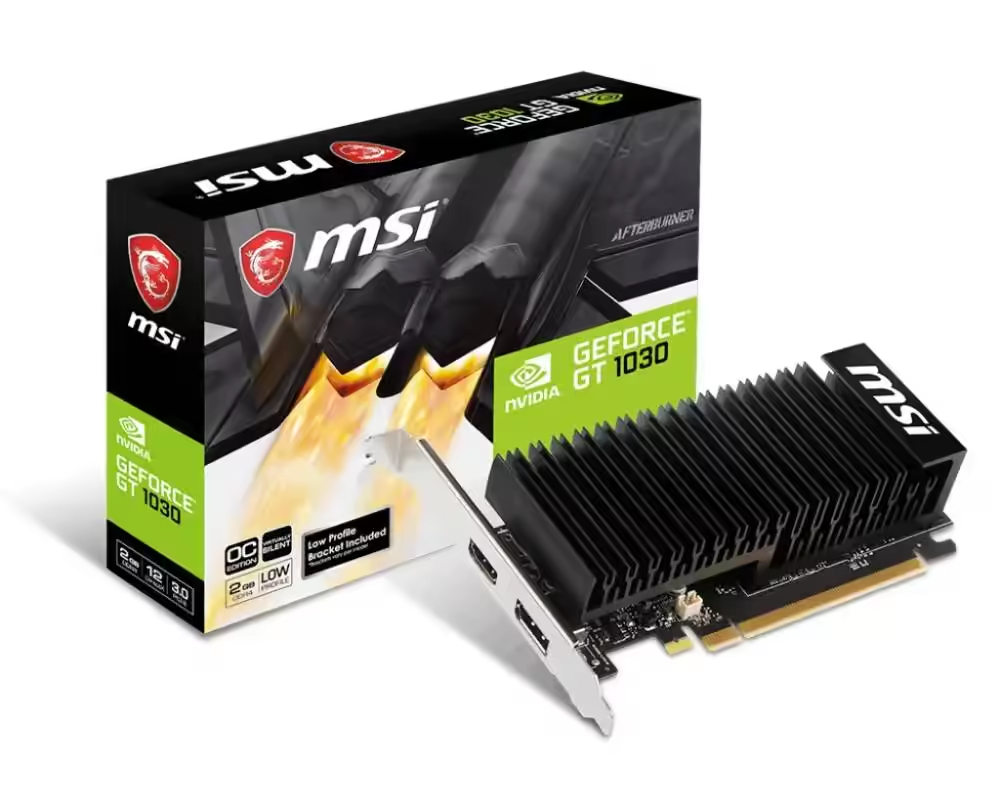
Graphics card MSI GeForce GT 1030 2GHD4 LP OC 2GB GDDR4 64 bit
- Nvidia GeForce
- GT 1030
- 2 GB
- GDDR4
- 384

Graphics card Zotac Twin Edge RTX 3060 12GB GDDR6 192 bit - ZT-A30600E2-10M
- Nvidia GeForce
- RTX 3060
- 12 GB
- GDDR6
- 3584

Graphics card ZOTAC Gaming GeForce RTX 5060 AMP CORE 8GB - ZT-B50600F2-10M
- Nvidia GeForce
- RTX 5060
- 8 GB
- GDDR7
- 3840

Graphics card PNY GeForce RTX 5070 12GB Triple Fan - VCG507012TFXPB1
- Nvidia GeForce
- RTX 5070
- 12 GB
- GDDR7
- 6144
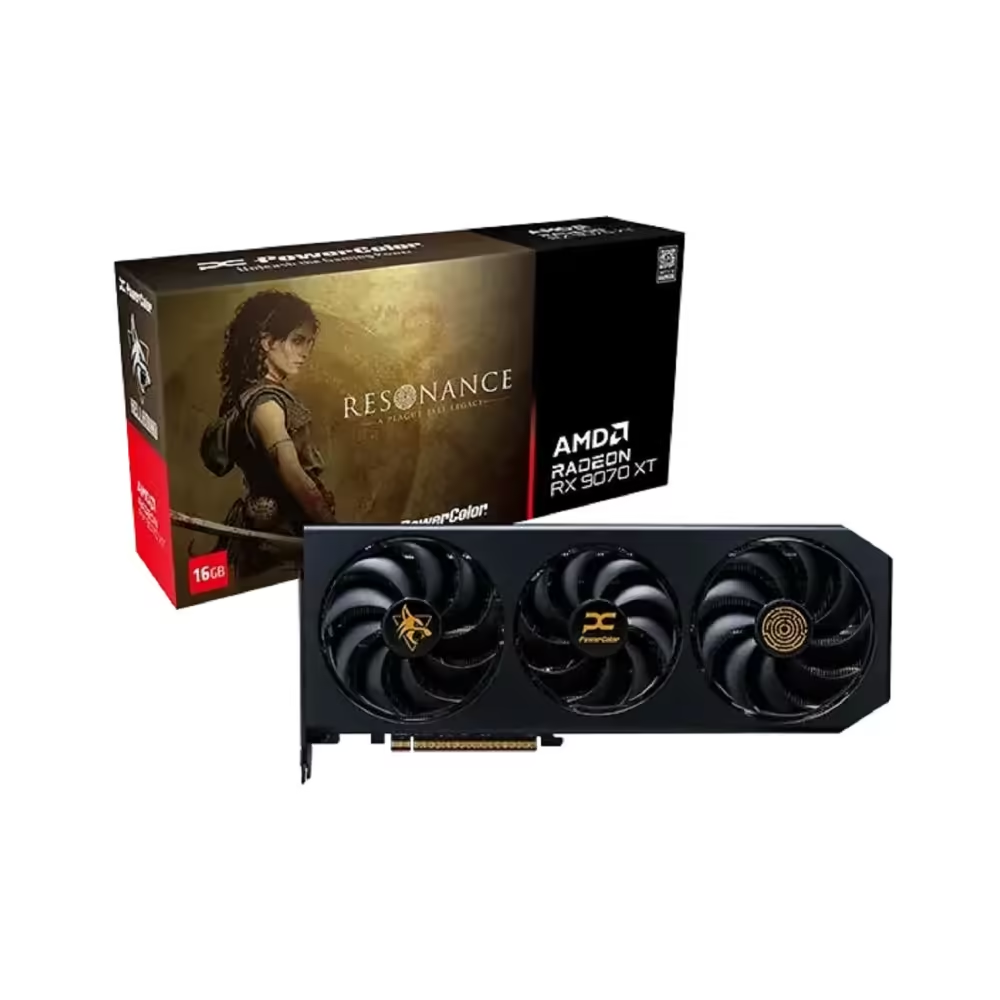
Graphics card PowerColor Hellhound AMD Radeon RX 9070 XT 16GB GDDR6 Resonance Edition - RX9070XT 16G-L/OC/RES
- AMD Radeon
- RX 9070 XT
- 16 GB
- GDDR6
- 4096

NVIDIA RTX PRO 4500 Blackwell 32GB GDDR7 Retail Graphics Card
- NVIDIA Quadro
- RTX PRO 4500
- 32 GB
- GDDR7
- 10496

Gigabyte AORUS GeForce RTX 5070 INFINITY 12G GDDR7 Graphics Card
- Nvidia GeForce
- RTX 5070
- 12 GB
- GDDR7
- 6144

NVIDIA Quadro RTX PRO 4000 Blackwell 24 GB GDDR7 Retail Graphics Card
- NVIDIA Quadro
- RTX PRO 4000
- 24 GB
- GDDR7
- 8960

Powercolor AI PRO R9700S 32GB Passive GDDR6 retail Graphics Card - AI PRO R9700S 32G-P
- AMD Radeon
- Radeon AI PRO R9700S
- 32 GB
- GDDR6
- 4096

Graphics card Sapphire Radeon AI PRO R9700 32GB GDDR6 256 bit - 32358-01-20G
- AMD Radeon
- Radeon AI PRO R9700
- 32 GB
- GDDR6
- 4096

NVIDIA RTX PRO 6000 Blackwell Workstation Edition 96GB GDDR7 512 bit graphics card
- NVIDIA Quadro
- RTX PRO 6000
- 96 GB
- GDDR7
- 24064

Graphics card Nvidia RTX PRO 4500 Blackwell Server Edition 32 GB GDDR7
- NVIDIA Quadro
- RTX PRO 4500
- 32 GB
- GDDR7
- 10496
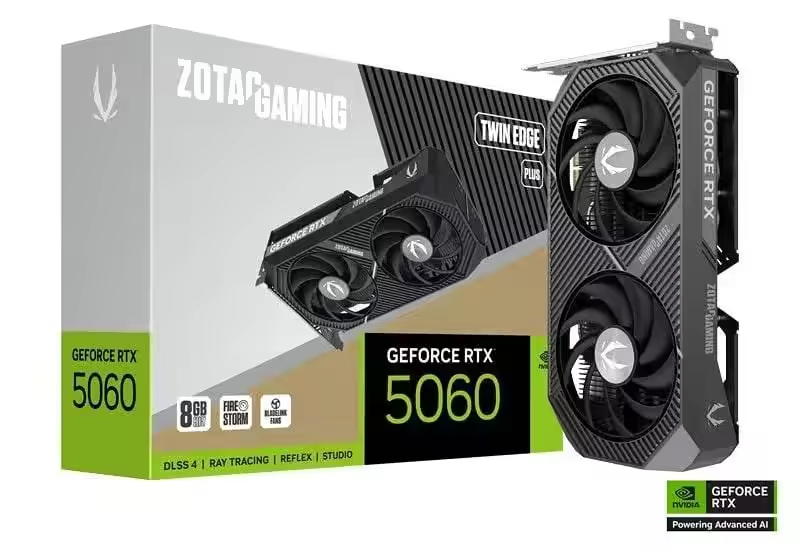
Video card ZOTAC GAMING GeForce RTX 5060 Twin Edge PLUS 8GB - ZT-B50600E2-10M
- Nvidia GeForce
- RTX 5060
- 8 GB
- GDDR7
- 3840

Video card GIGABYTE GeForce RTX 5060 WINDFORCE MAX OC V2 8G GDDR7 - GV-N5060WF2MAX OCV2-8GD
- Nvidia GeForce
- RTX 5060
- 8 GB
- GDDR7
- 3840

Gainward RTX 3060 Python II OC 12GB GDDR6 - NE63060U19K9-PG190V
- Nvidia GeForce
- RTX 3060
- 12 GB
- GDDR6
- 3584

Nvidia RTX PRO 5000 Blackwell 48 GB GDDR7
- NVIDIA Quadro
- RTX PRO 5000
- 48 GB
- GDDR7
- 14080
Useful when choosing
The graphics card determines how smoothly games will run, how quickly video will render, and whether the computer can handle AI tasks locally. Here you will find models with NVIDIA GeForce, AMD Radeon, and Intel Arc chips – from quiet cards for office and multimedia to flagships for 4K gaming.
How to choose
- Monitor resolution. For 1920 x 1080, a mid-range card is sufficient. For 2560 x 1440 and especially for 4K, a more powerful chip is required; otherwise, you will have to lower the settings.
- Video memory (VRAM). 8 GB is the minimum for modern games in Full HD. For 1440p and heavy textures, look for 12–16 GB, and for 4K, 3D, and local AI models – 16 GB and above.
- Chip generation. Newer generations provide more frames at the same power consumption and support DLSS, FSR, or XeSS – technologies that increase frames with minimal loss of image quality.
- Cooling. Almost all cards have active cooling with two or three fans. A larger heatsink means quieter operation. Passive models are only for weak systems without gaming.
- Brand of the card. The same chip is sold by ASUS, MSI, Gigabyte, Palit, Sapphire, PowerColor, and others. The differences are in cooling, noise, size, and factory overclocking – performance is almost the same, so compare sizes and noise.
- Purpose. Besides gaming cards, there are professional series for CAD and rendering, as well as cheap multimedia cards that simply add outputs for monitors.
What to watch out for
- Check the length of the card and how many slots it occupies – many models are thick 2.5 to 3.5 slots and do not fit in small cases.
- The power supply must have enough wattage and the correct cables – 8-pin PCIe or the new 16-pin connector.
- A weak processor limits a strong card, especially in Full HD and at high frame rates.
- Connect the monitor to the graphics card output, not to the motherboard.
- For high refresh rate monitors, check that the card has DisplayPort or HDMI 2.1 with the required bandwidth.
Compatibility
All modern cards use the PCIe x16 slot and work with any new motherboard – the older version of PCIe rarely makes a noticeable difference. Before purchasing, compare the sizes with the case, check the power of the power supply, and whether the processor is in the same class. If you are building a whole system, the configurator checks compatibility for you.