
Graphics cards
11 products

Asrock INTEL ARC PRO B60 CREATOR 24G Graphics Card
- 24 GB
- GDDR6

ASRock Intel ARC Pro B70 Creator 32GB Graphics Card
- Intel Arc
- 32 GB
- GDDR6

Graphics Card ASRock RADEON RX 9070 XT TAICHI OC 16GB GDDR6
- AMD Radeon
- RX 9070 XT
- 16 GB
- GDDR6
- 4096

Asrock AMD Radeon RX 9060 XT Challenger 16GB OC Graphics Card - RX9060XT CL 16GO
- AMD Radeon
- RX 9060 XT
- 16 GB
- GDDR6
- 2048
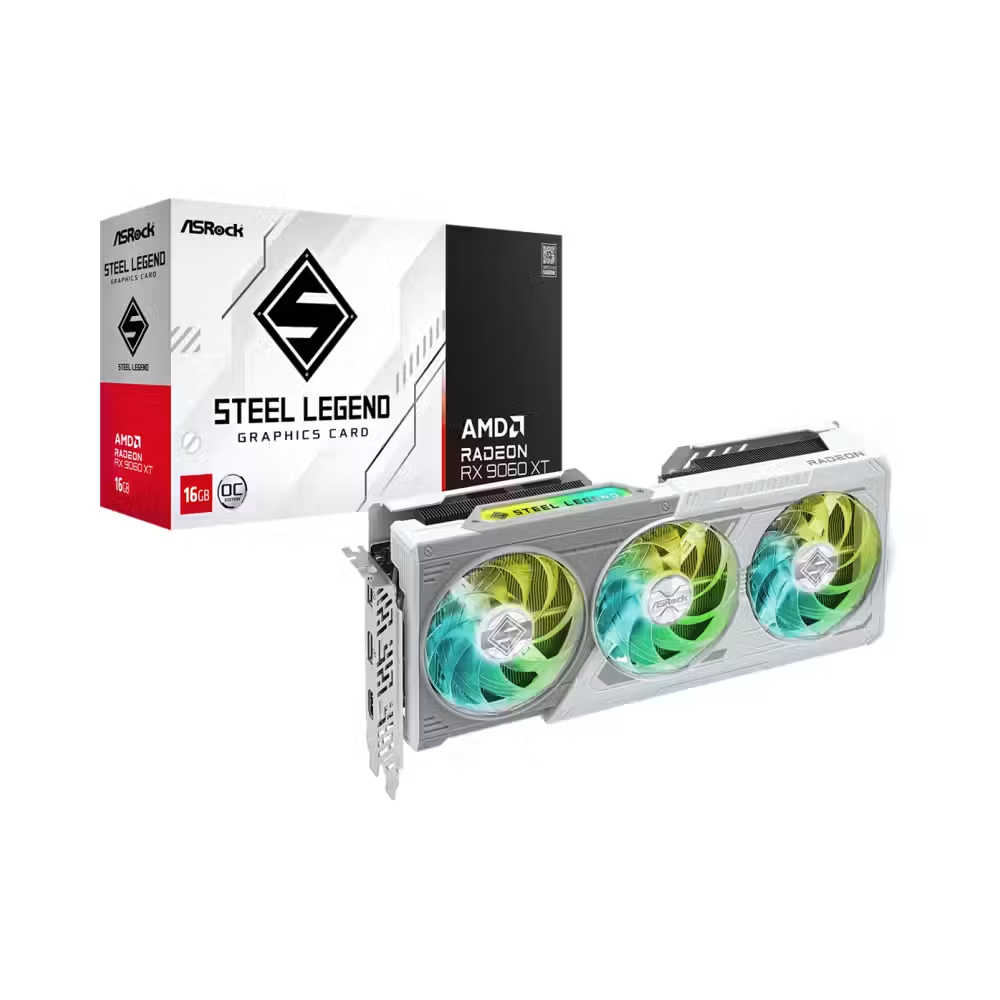
Graphics Card Asrock Radeon RX 9060 XT Steel Legend 16GB OC GDDR6
- AMD Radeon
- RX 9060 XT
- 16 GB
- GDDR6
- 2048

Asrock AMD Radeon RX 9070 XT Steel Legend Dark 16GB Video Card
- AMD Radeon
- RX 9070 XT
- 16 GB
- GDDR6
- 4096

Graphics Card Asrock Radeon RX 9070 Challenger 16GB - RX9070 CL 16G
- AMD Radeon
- RX 9070
- 16 GB
- GDDR6
- 3584
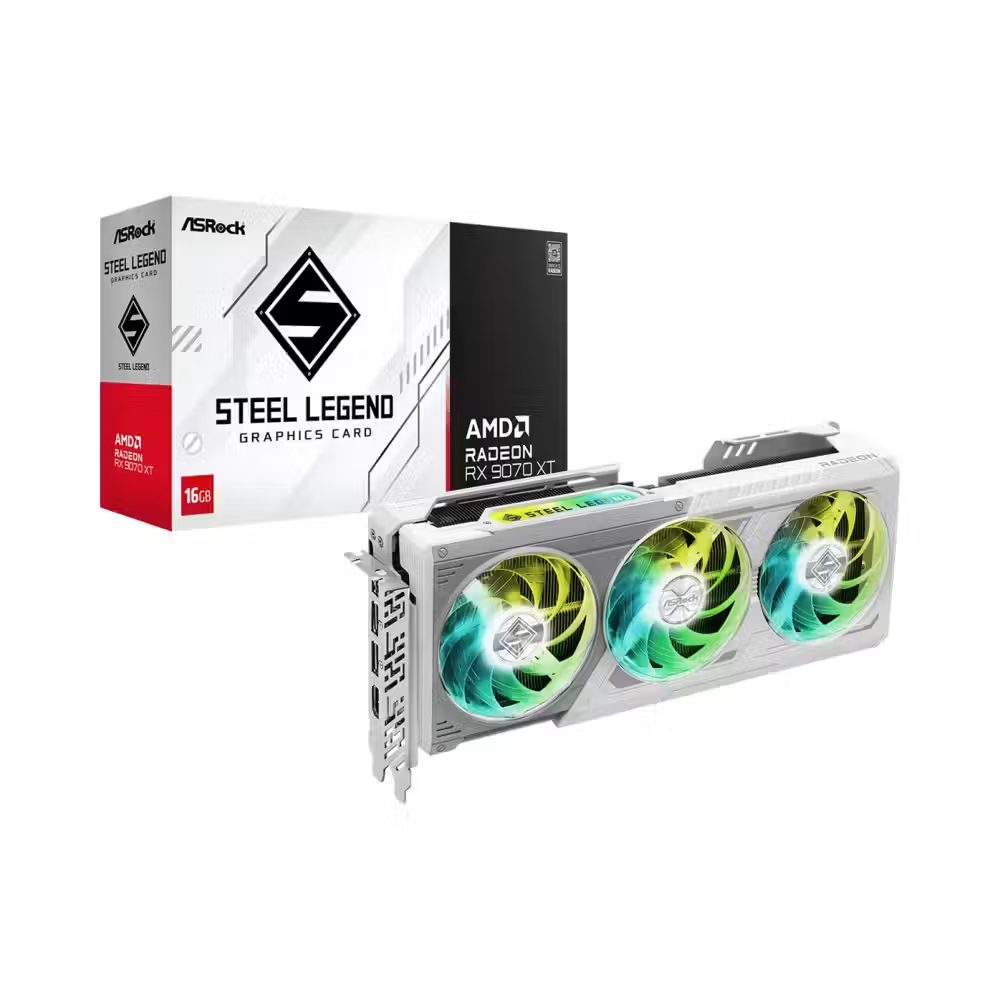
Graphics card Asrock AMD Radeon RX 9070 XT Steel Legend 16GB
- AMD Radeon
- RX 9070 XT
- 16 GB
- GDDR6
- 4096

ASRock Intel ARC B570 Challenger 10GB OC Graphics Card
- Intel Arc
- Arc B570
- 10 GB
- GDDR6

Graphics card ASRock Intel ARC B580 Challenger 12GB OC
- Intel Arc
- Arc B580
- 12 GB
- GDDR6

Graphics card Asrock AMD Radeon RX 7600 Challenger OC 8GB GDDR6
- AMD Radeon
- RX 7600
- 8 GB
- GDDR6
- 2048
Useful when choosing
The video card is the component that determines what settings and how many frames you will play at. Today, the choice of video cards revolves around two families — NVIDIA GeForce RTX 50 series (RTX 5060, 5060 Ti, 5070, 5070 Ti, 5080, 5090) and AMD Radeon RX 9000 series (RX 9060 XT, RX 9070, RX 9070 XT) — plus Intel Arc as a budget alternative. Here you will find models from ASUS, MSI, Gigabyte, ASRock, Sapphire, Palit, and other partner manufacturers.
How to choose a video card
- Monitor resolution and hertz: for 1080p/144Hz, mid-range cards are sufficient; 1440p requires RTX 5070 / RX 9070 class; 4K gaming is the territory of RTX 5080 and above.
- Video memory: 8GB is the minimum for 1080p, 12–16GB for 1440p and textures of new titles, 16GB+ for 4K and AI/render work.
- Upscaling technologies: DLSS 4 (NVIDIA) and FSR (AMD) significantly increase frames — look for comparisons specifically for the games you play.
- Power supply and dimensions: high-end cards require 750–1000W quality power supply and space in the case — check the length before ordering.
NVIDIA or AMD
GeForce wins in ray tracing and the DLSS ecosystem, while Radeon traditionally offers more raw raster for the money and more generous video memory in the mid-range. Both are excellent choices — the decisive factors are the current price and the games you are playing.
Make sure that your power supply has the necessary watts and connectors, check the frames on the desired monitor, or go ahead and build your computer online — the configurator checks compatibility and dimensions. If you don't want to build it yourself, check out the ready gaming configurations with a mounted and tested card.